Cubicle and Workstation Disassembly, Moving and Reinstallation
Cubicle and workstation disassembly is the careful dismantling of panel-based furniture systems so they can move to a new office and be rebuilt. Panels, worksurfaces, overhead bins, tile covers, electrical channels and hardware have to come apart in the right order and stay together as sets.
Describe the job and add your city. Free to request, no obligation.
Labelling is what makes reassembly possible. Each station is tagged and its parts bundled so the installer in the new space is not matching hundreds of loose panels by eye. The new floor plan decides how many workstations are rebuilt, and which parts are spare.
These systems are heavy, and old components can be brittle or discontinued. Tell the specialist the brand and model if you know it, how many stations there are and whether the new layout is the same or different. If some stations will not be reused, the plan can include removing and recycling them.
What the work includes
- Survey of stations, panel heights and configurations
- Disassembly of panels, worksurfaces, bins and electrical components
- Labelling and bundling of parts by station or zone
- Padded transport that protects fabric and panel edges
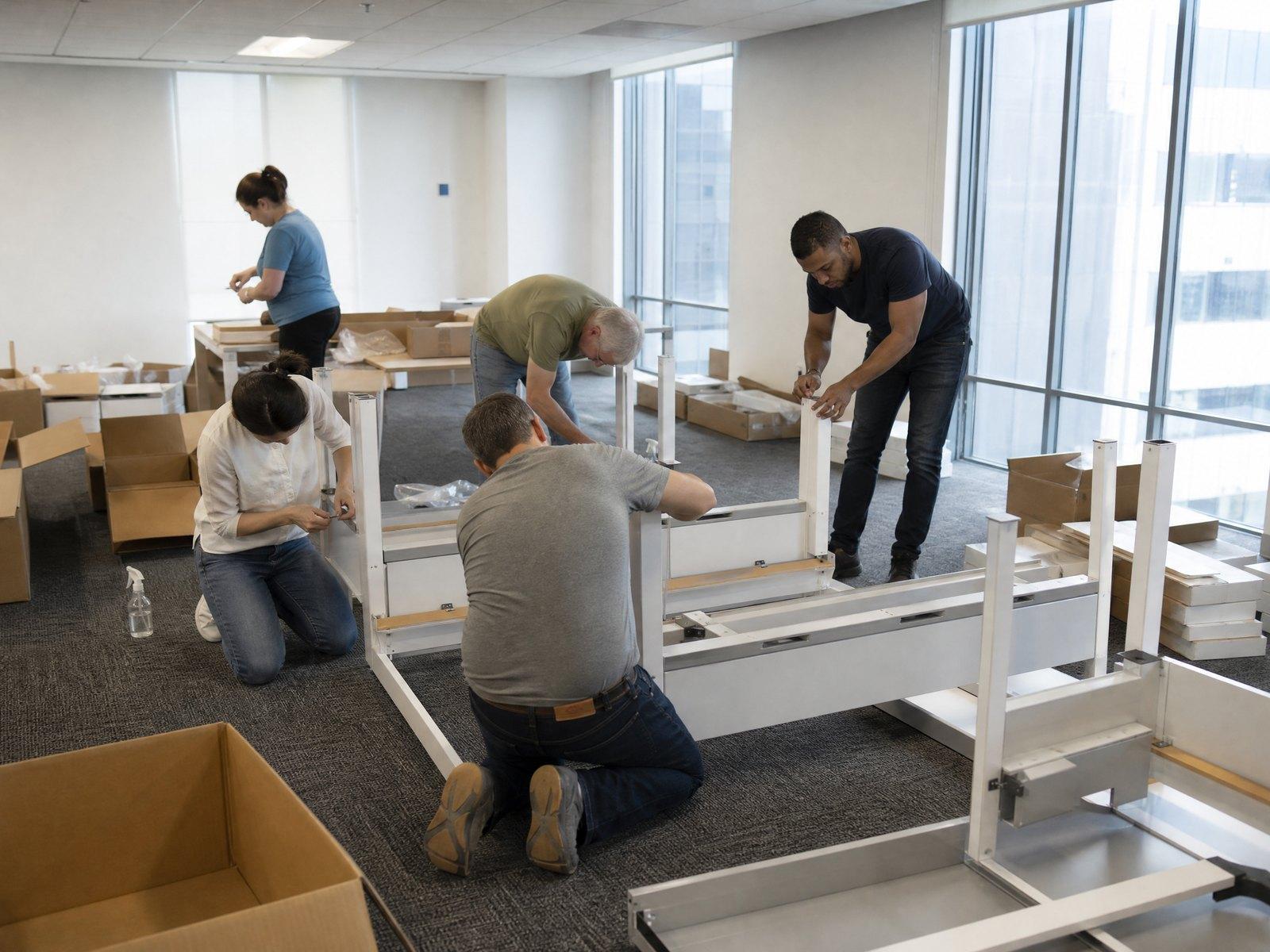
- Reassembly to the new floor plan
- Leveling, power connections and tile replacement where specified
- Handling of surplus components for storage or disposal
- Removal of packaging and debris
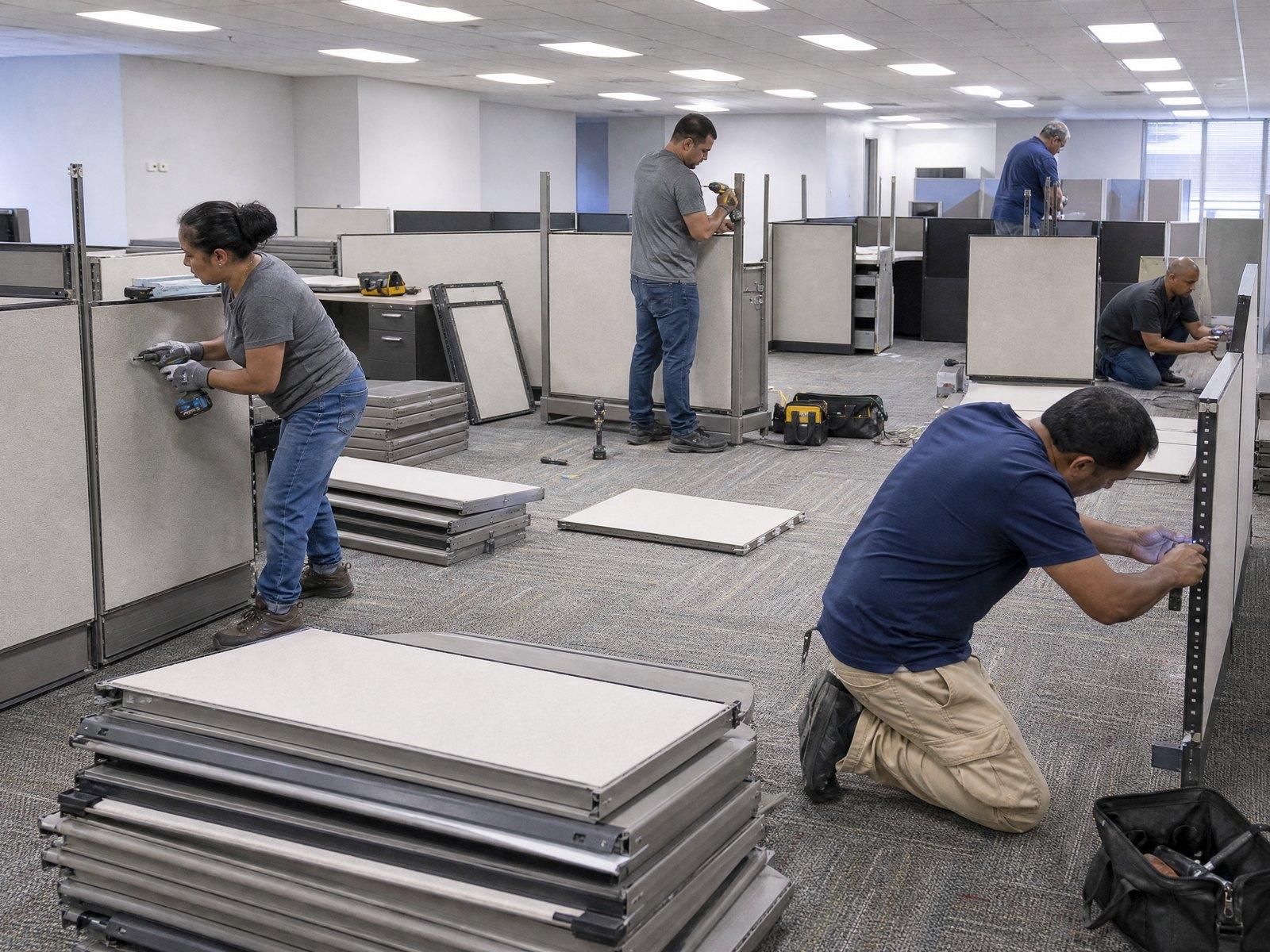
Signs a workstation system needs a professional dismantle
The company is moving and wants to reuse its existing panel systems
The new floor plan changes how stations are arranged
Parts are discontinued, so lost pieces cannot be replaced
Stations have integrated power and data that must be disconnected safely
Previous in-house attempts left panels damaged or hardware missing
How the work goes, step by step
Survey
Send photos, the count of stations, the brand if known and the new floor plan.
Plan the layout
A specialist compares old and new layouts to see which stations are reused and which parts are spare.
Written quote
The quote covers disassembly, labelling, transport, reassembly and what happens to extras.
Disassembly
Stations are taken apart and parts are bundled and tagged.
Reinstall
Systems are rebuilt in the new space, then leveled, checked and cleaned.
What changes the price
- Number and size of stations
- More stations and taller panels mean more hours.
- System type
- Some systems are easy to take apart, while older or mixed systems are slower.
- Electrical and data components
- Powered panels need qualified disconnection and reconnection.
- New layout
- Changing the configuration costs more than rebuilding the same stations.
- Condition of components
- Worn hardware or damaged panels may need replacement parts.
- Storage or disposal
- Surplus stations cost to store or recycle.
What a good quote spells out
- Whether the same crew handles dismantling and reassembly
- How parts are labelled and tracked between sites
- Who is responsible for electrical and data connections
- What happens with spare panels, hardware and discontinued parts
- A walkthrough after reassembly to catch missing or loose pieces
Modular Disassembly: questions people ask
Can cubicles be reused in a new office?
Often yes, if the system is in good shape and the parts are kept together. Some layouts need extra panels or connectors.
Is it cheaper to reuse or buy new?
Reusing usually costs less up front, but heavily worn or discontinued systems can make new furniture a better choice.
Who disconnects the power in powered panels?
A qualified electrician or the building's facilities team is typically responsible. Confirm this in the quote.
What happens to stations that are not reused?
They can be stored, donated, sold or recycled. Say what you prefer when you request a quote.
Other Mobilix services
Have a Move Coming Up? Let's Plan It.
Tell us about the move and add floor plans or photos if you have them. We review every request, and a specialist who serves your area follows up in writing with a move plan and a free quote.
Request a free quote →